





















Variant
Price
Availability
Quantity
Buy
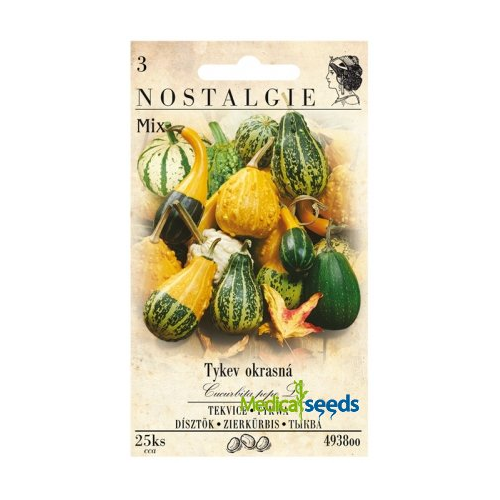
In addition to pumpkins, which are used in cooking, ornamental gourds are also grown. Their flesh is edible, but their appearance makes them ideal for decoration. When should they be harvested and how can you ensure that they decorate your interior until spring? Growing pumpkins is not difficult and the harvest is usually huge. Ornamental pumpkin varieties are also fertile. Their flesh is not particularly tasty, but they are all the more interesting for their appearance. Their bright colors, interesting patterns, and charming and bizarre shapes make them veritable works of art. During flowering and ripening, they adorn the garden, and the ripe fruits serve as decorations. In the kitchen, they create the perfect rustic still life, brighten up the hallway, or welcome guests on the porch...
Ornamental pumpkins can be grown in a flower bed, where they crawl like ground cover plants. They can also climb on supports, which saves space in the garden and looks very nice. Pumpkins have decorative, dense leaves and flowers, and when the fruits begin to color at the end of summer, they serve as perfect ornamental plants. They can climb along a fence, pergola, or various structures that you can create for them from sticks.
Seeds are sown from mid-May.In the garden bed, it is necessary to maintain a spacing of at least half a meter if the plants will climb upward. Thirty to forty centimeters is sufficient.They thrive in nutritious soil and plenty of sun. Ornamental pumpkins can be harvested in September and October. The ideal time cannot be determined by the calendar – the pumpkins themselves will give you a better indication. They should be well ripened, as underripe fruits can start to rot. The skin of ripe fruits is very hard, no longer shiny, and small dry cracks form on the stem, which gradually dries out.
However, even well-ripened pumpkins can start to mold if they are stored in a damp place immediately after picking. They need to be left to dry in the sun, protected from rain – preferably for a week, depending on the weather. Turn them occasionally while drying.
They will then last longest in an airy place at a temperature of 10 to 18 °C. Leaving a longer stem (the wound is an entry point for various microorganisms that cause decay) and spraying with a colorless varnish also helps prevent spoilage.